
If there is one thing clear-cut about the ongoing transition of Europe’s power grids, it is that humans can no longer manage the sheer volume of operational data alone. Between the surge in smart meters, local solar arrays and fluctuating electric vehicle demands, artificial intelligence is quickly moving from a helpful analytical novelty to an absolute systemic necessity for Grid AI compliance.
Yet, an uncomfortable reality remains: power grids are safety-critical systems. You cannot deploy an unproven machine learning prototype to manage high-voltage substations, nor can you easily assess how a software model will behave under stress or whether it complies with the strict risk criteria of the new EU AI Act.
A landmark answer to this operational bottleneck was presented at the ICE 2026 conference in Porto, Portugal. A technical research team from the National Technical University of Athens (NTUA) unveiled a comprehensive, open reference architecture for EnergyGuard – the first pan-European Testing and Experimentation Facility (TEF) specifically engineered to turn unvalidated algorithms into compliant, marketplace-ready grid applications.
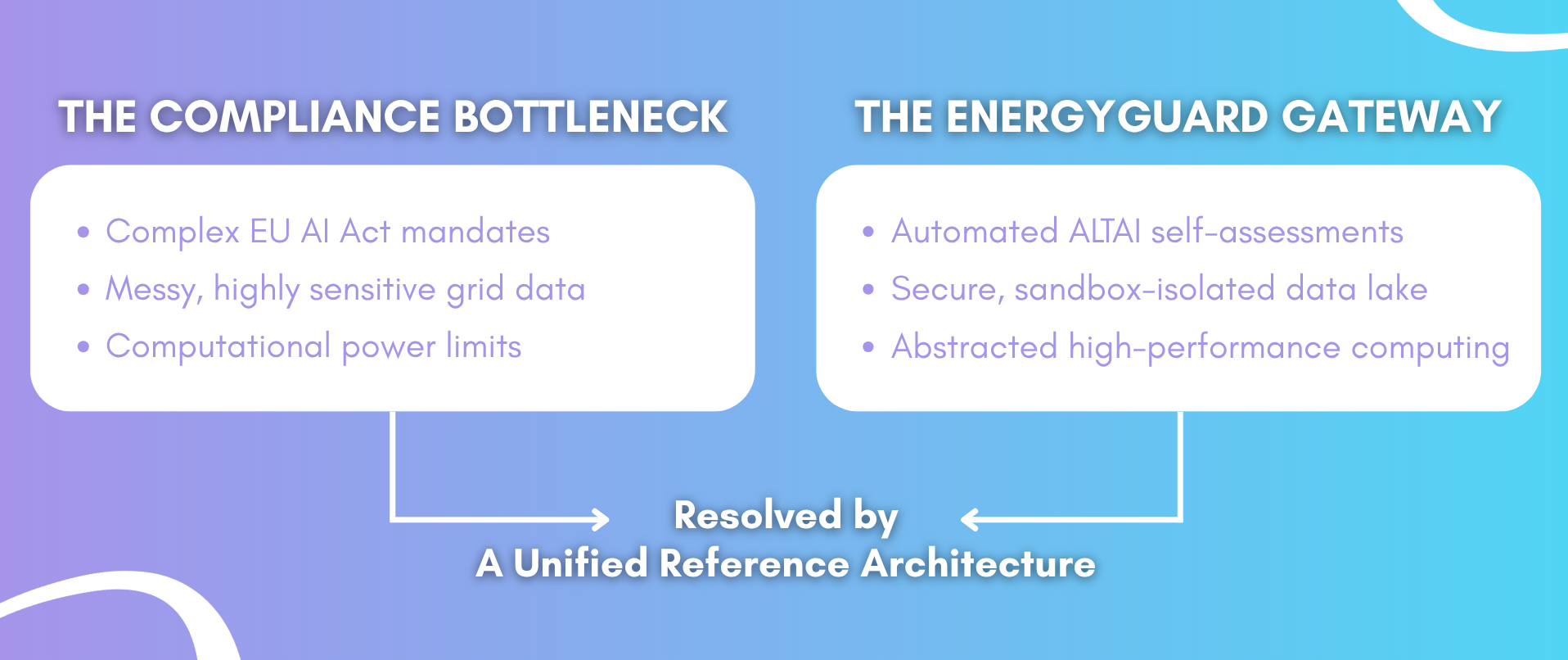
Figure 1: How EnergyGuard bridges compliance barriers with a unified reference architecture.
The Four Pillars of Trustworthy Grid AI
To bring experimental research prototypes into actual utility deployment, the newly presented reference architecture integrates four core backend environments under a single user interface:
- Sovereign Data Spaces: A structured data backbone that allows utilities to securely share live and historical operational datasets while retaining absolute control over how their data is used and anonymised.
- The Sandbox and Its Digital Twins: A diverse portfolio of Digital Twins (including models of the Portuguese transmission network and residential heating in Riga) that lets developers stress-test algorithms against simulated anomalies without risking live power networks.
- Automated Trustworthiness Benchmarks: A dedicated acceptance layer that subjects model predictions to quantitative checks for adversarial robustness, explainability and fairness – ensuring algorithms do not systematically disadvantage specific consumer groups or low-voltage regions.
- HPC Integration: On-demand, GPU-accelerated computing through Luxembourg’s MeluXina supercomputer, managed via an abstracted coding interface to keep the platform accessible to small startups.

Figure 2: Pipeline view from raw model training to the Trustworthy AI compliance layer.
Real-World Feasibility
To prove the platform works, the paper highlights two active validation tracks:
i) AI-enabled decision support for energy efficiency investments in residential buildings using building and energy performance datasets in Riga.
ii) Utilising timeseries data to produce week-ahead consumption and generation forecasts and assessing their impact through the digital twin of the Portuguese transmission grid.
As Europe seeks to accelerate its carbon reduction targets, the rate of software deployment must match the speed of hardware development. By presenting a clean, cohesive blueprint that connects raw academic code with rigorous European regulatory compliance, the EnergyGuard team has laid down the necessary foundation for the next generation of public utilities.
For a detailed look at the component interactions, operational use cases and how this architecture aligns with major European digital initiatives, read the full paper here.